5.0 · 624 reviews · Jim Blackburn · NMLS #1072866
Equal Housing Lender
(954) 993-1625
See My Options 60-sec match · no credit pull
Air Traffic Controller Home Loans

Air traffic controller mortgage — how controllers qualify for home loans.

Federal pay scales look simple on paper. In practice, an ATC's real pay can be 40–80% above the published GS number once you add locality, Sunday premium, night differential, holiday pay, and Controller Incentive Pay. Most lenders use the published number. We use the real number.

NMLS #1072866 · Specialist in aviation-industry & variable-income mortgages
Modern airport control tower bathed in sunset light over an airfield
3
Income methods adapted for federal ATC pay structures
5
Loan programs we use across the developmental-to-retirement arc
48
States where we close controller home loans
56
Mandatory ATC retirement age — your loan must amortize accordingly
LAX air traffic control tower silhouetted against a stunning sunset sky

Stairway Mortgage qualifies air traffic controllers on the income they actually earn — locality pay included, premium pay counted, facility-upgrade trajectory factored in. A developmental at OKC, a CPC at a Level 8 tower, a Level 12 en-route controller at ZNY, a TMC, a supervisor, and a pre-retirement controller planning around the age-56 mandatory exit each get qualified using the income method that fits their position on the federal pay scale.

Close-up architectural detail of an airport control tower
Real federal pay. Real career arc. Real underwriting.
Key Facts & Highlights

Key facts every air traffic controller should know about home loans.

Each point below is sourced from federal, regulatory, or industry authorities. Verify any of them directly through the linked references.

01 · Who this page is for

Air traffic controller mortgage scenarios from training through retirement.

Developmental at the Academy. CPC at a Level 7 tower. Level 12 en-route. Supervisor. Pre-retirement. Each gets qualified on the right number for their stage.

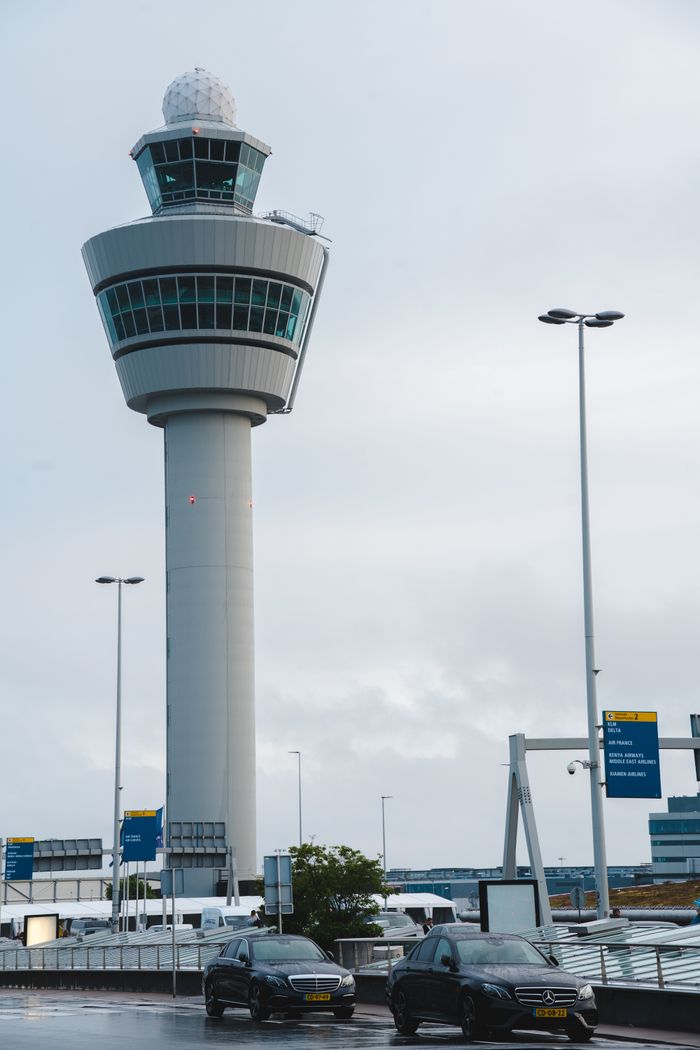
Schiphol airport control tower with active ground operations
Approach / regional tower
Iconic modern air traffic control tower at Istanbul Airport
Major-hub tower (Level 10–12)
Sleek modern air traffic control tower at Belgrade airport
En-route center facility
Career stage Typical pay (2026) Where the qualifying complexity is
Developmental at Academy (OKC) $45K – $55K + housing allowance Training pay, future facility uncertainty, OKC housing market
Developmental at facility (FG-2152) $50K – $75K + locality In training at assigned facility, pay scales with certification milestones
CPC at Level 4–6 facility $95K – $135K + locality + premium Smaller towers / TRACONs, lower locality but stable schedule
CPC at Level 7–9 facility $120K – $170K + locality + premium Mid-tier facilities, significant Sunday/night premium
CPC at Level 10–12 facility $155K – $240K + locality + premium Major en-route centers, busy TRACONs, top locality + premium load
TMC / Traffic Management Coordinator $155K – $220K + premium Senior controller role, often combined with supervisory duties
Supervisor / FLM / OM $170K – $280K + locality Salaried federal role with reduced premium-pay exposure
Pre-retirement (within 5 years of 56) Peak earnings + transition planning Mandatory retirement at 56 changes mortgage math; structure accordingly
02 · Income qualification

How we calculate qualifying income for your air traffic controller mortgage.

Most ATC mortgages we write are anchored on Method 2 — because a controller's real pay is the federal base + locality + premium pay components. Method 1 qualifies developmentals on their starting GS step. Method 3 (future-rate) covers facility upgrades, certification milestones, and supervisor promotions where pay jumps significantly. Browse our loan programs or run numbers on our calculators.

01

Federal GS base × locality factor

Best for: developmentals & new CPCs

For ATCs at the start of their career — developmentals at the Academy or at their assigned facility — we qualify on the FAA pay tables: GS base × locality factor for your city × 12. Conservative, fully documented from your first pay stub. Once you have 12 months of premium pay history, Method 2 takes over.

Worked example — Developmental at Dallas TRACON
FG-2152, AT-2/E (developmental)$54,500 base
Dallas locality (29.91%)+$16,301
Qualifying monthly base$5,901
Qualifying annual base$70,801
02

Twelve-month average — locality + all premium pay

Best for: certified controllers (CPC) with 12+ months at facility

For CPCs with 12+ months of certified controller work, this is the workhorse method. We pull your most recent 12 months of gross pay — including base, locality, Sunday premium (25%), night differential (10%), holiday pay (2x), CIP (Controller Incentive Pay), and any premium pay for working short or operational positions — divide by 12, and use that as qualifying. Often 40–80% above the published GS number.

Worked example — CPC at Atlanta TRACON, 4 years certified
Last 12 months gross$186,400
base GS + Atlanta locality (24.42%)
Sunday premium + night diff + holiday pay
CIP for ZTL airspace coverage
Qualifying monthly income$15,533
Qualifying annual income$186,400
Method 1 on this same CPC would qualify $148K (base × locality only). Method 2 captures the $38K of premium pay most lenders refuse to count.
03

Future-rate qualification

Best for: facility upgrades, supervisor promotions

If you've been awarded a facility upgrade (Level 8 to Level 12), promoted to supervisor or TMC, or selected for a position with documented effective date and pay grade — we qualify you on the new pay. Federal facility upgrades can mean $40-80K annual income changes; we don't make you wait six months on the new pay stub.

Which method applies to you?

We pick the method during your initial consultation. Most air traffic controllers fit cleanly into one. Some — especially those mid-promotion or just hired — qualify for a stronger result by combining methods. Your initial call takes about 20 minutes, and we'll tell you exactly which method gets you the most qualifying income, and what your monthly payment looks like.

Radar tower with airplane in clear blue sky, showcasing aviation technology
In practice

"Most controllers qualify for $200K–$350K more home when locality & premium pay are counted properly."

03 · Locality & premium pay

The air traffic controller mortgage pay reality lenders miss.

Federal GS tables show base pay. Real ATC pay = base + locality (16–45% depending on city) + Sunday premium (25% of base) + night differential (10% of base) + holiday pay (2× rate) + CIP. For a Level 12 controller at NY TRACON working a typical schedule, the layered components double the GS base. Lenders who use the GS number leave 30–50% of qualifying income on the floor.

Why generalist lenders miss federal premium pay

Lenders pull the published GS pay tables, see a flat number, and stop. Locality varies by 53 zones (16% in rest-of-U.S. to 45%+ in San Francisco). Sunday/night/holiday premiums compound based on bidding. CIP varies by facility. The federal pay structure is documented in the FAA collective bargaining agreement with NATCA — readable, calculable, and underwritable. Just not by lenders who haven't read enough ATC files.

How we document & count it

  • i.Latest LES (Leave & Earnings Statement) and 2-year SF-50 history.
  • ii.NATCA collective bargaining agreement reference for premium pay rates and rules.
  • iii.12 or 24-month average of all components combined — base + locality + premiums.
  • iv.Facility level confirmation (Level 7 vs 12 changes the qualifying ceiling).
What it adds — worked

A CPC at Atlanta TRACON earning $115,000 GS base + 24.42% Atlanta locality + 8% Sunday + 4% night + holiday + CIP = ~$186K total comp. Lenders using only GS+locality would qualify $143K. The $43K difference, at current rates on a 30-year mortgage, equals roughly $575,000–$640,000 of additional home you can qualify for. For a Level 12 ZNY controller, the lift is larger.

04 · Loan programs

Which loan program fits your air traffic controller mortgage situation.

Every air traffic controller's loan looks slightly different. These are the programs we use most often, with deep-dive pages showing current eligibility and payment calculators.

Asset-Based Loan

Pre-retirement controllers (within 5 years of 56) with substantial TSP and brokerage balances. Qualify on assets rather than (or in addition to) pay. Particularly useful given the mandatory retirement age.

05 · The playbook

Air traffic controller mortgage planning by career stage.

Different stages call for different approaches. Here's what we typically recommend based on where you are.

Stage 01

Developmental at Academy (OKC)

You're at the FAA Academy in Oklahoma City. Pay is modest, OKC housing is affordable, and your future facility is uncertain. Some Academy students buy in OKC; most rent.

  • If you're likely to stay in OKC region (FAM, OKC tower, etc.), buying makes sense — Academy pay qualifies you for a modest home.
  • If your facility assignment is unknown, rent through Academy and revisit after assignment.
  • OKC is a low-cost-of-living market — even a small purchase builds equity vs renting.
  • Method 1 qualifying on Academy GS pay × OKC locality (15.95%).
Stage 02

Developmental at facility

You're assigned to a facility and you're in training. Pay scales with certification milestones. You're not yet a CPC.

  • Method 1 still applies but now with your facility's locality factor.
  • Buying near your facility makes sense if your training trajectory is solid — most developmentals certify within 2–3 years.
  • Consider house size carefully: certification failures (washouts) do happen, and a smaller home is safer until you're a CPC.
  • FHA with 3.5% down keeps reserves intact through certification.
Stage 03

Newly CPC (years 1–3 certified)

You're a Certified Professional Controller. Premium pay starts compounding. Your income trajectory is set.

  • Transition from Method 1 to Method 2 once you have 12 months of CPC premium pay history.
  • Pay growth is steepest in years 1–3 after certification — be patient on home size if a facility upgrade is on the horizon.
  • Investment property near facility becomes feasible — DSCR loan keeps personal qualifying clean.
  • Start TSP maximization early: federal match is 5%, and the pension calculation depends on contribution history.
Stage 04

Senior CPC at Level 7–9 facility

You're a senior CPC at a mid-tier facility. Premium pay is significant. Income is stable. House decisions get strategic.

  • Method 2 captures full pay including all premiums.
  • Facility-upgrade bid awareness — if you're likely to bid up to a Level 10+, factor that into purchase decisions.
  • Jumbo eligibility opens in expensive metros.
  • TSP, FERS, and Social Security planning becomes important — federal benefits structure differs from private sector.
Stage 05

Level 10–12 / supervisor

Top of the operational ladder. Peak income for non-management track. Jumbo territory in most markets.

  • Most homes will be jumbo. Asset-based qualification often supplements W-2.
  • Facility upgrade bids change cities and pay simultaneously — close before the move when possible.
  • Mandatory retirement at 56 is now in view (5–15 years out). Loans should amortize accordingly.
  • TSP balance becomes substantial — can serve as down payment source or asset-based qualifying engine.
Stage 06

Pre-retirement (within 5 years of 56)

The mandatory retirement age changes the mortgage math. Post-56 income is FERS pension + TSP withdrawals + Social Security supplement, plus potentially private-sector consulting or contract ATC.

  • Loans should fully amortize before 56, or have a clear path to refi/payoff at retirement.
  • Asset-based qualifying often beats W-2 — use TSP and brokerage to qualify.
  • Plan post-56 income now: FAA contracting, simulator instructor, private aviation consulting, foreign ATC.
  • HELOC against equity provides flexibility without disturbing the existing mortgage.
Stage 07

Military-to-FAA transition controller

You worked Air Force, Navy, or Marine ATC and you're now in FAA. Two pension streams (military + FERS) and likely VA loan eligibility.

  • VA loan eligibility is the foundation — zero down, no PMI, VA jumbo scales.
  • Military pension + FAA income + locality + premium = qualifying base often $250K+.
  • If you're still ANG or Reserve, drill pay adds another stream we count.
  • TSP carries from military service — FERS supplement combines cleanly.
The state of the U.S. air traffic system

Inside the controller borrower's profession.

A mortgage for an air traffic controller rarely turns on the loan alone. The career runs inside an industry going through real transformation — modernization funding, staffing pressure, fatigue research, federal pay disruption, training pipeline expansion, and now legislative recognition of the financial strain on controllers. We track all of it because it shows up in your qualifying income, your timing decisions, and your career-stability assumptions. Here's what's shaping the conversation right now.

FAA NextGen — the modernization of air traffic control

The FAA NextGen modernization program informing air traffic controller mortgage planning is the largest U.S. aviation infrastructure program in 40 years — transitioning controllers from voice-based radar separation to data-linked trajectory-based operations. The DOT modernization framework documents the multi-year rollout. TechSpot's coverage of aging ATC technology describes the technical debt NextGen is meant to retire. For the borrower, NextGen matters as career context: facility consolidations, en-route center upgrades, and new tool deployments translate into facility transfers, schedule changes, and pay-grade transitions — each of which can affect a mortgage application timeline.

The U.S. air traffic controller staffing shortage

NPR has covered the air traffic controller shortage extensively, documenting an FAA workforce roughly 3,000 controllers below the staffing target. NBC News connected the shortage to widespread flight delays across major hubs. Investing.com tracked the FAA's downward revision of its staffing target. The shortage drives mandatory overtime, six-day weeks, and premium-pay saturation — which directly benefits the borrower's qualifying income if the lender knows how to count it. Most generalists don't; we do.

NTSB concerns about air traffic controller fatigue

The NTSB fatigue recommendations document a decade of safety recommendations about controller scheduling — specifically the "rattler" schedule that compresses five shifts into roughly 80 hours. The Los Angeles Times on Burbank tower fatigue dynamics illustrates how regional facility staffing translates to individual controller workload. The fatigue issue connects back to the staffing shortage and the premium-pay structure — and to your application, where understanding the actual schedule (not the published one) is what produces accurate qualifying income.

AI and automation in air traffic control

The next wave of NextGen explores AI-assisted controller workflows — conflict prediction, automated handoff suggestions, and machine-readable flight strips. Coverage from Aviation Today on ATC automation tracks deployments. For the borrower, AI automation is a 10–20 year career horizon question, not an immediate one — but it shapes long-term qualifying decisions like whether to take on a 30-year mortgage at 50 if your facility may consolidate before 65. Pilot deployments at Houston Center and the Potomac TRACON suggest a gradual integration rather than wholesale replacement; the human controller remains the legal authority on every separation decision. Bargaining language in the current NATCA agreement also protects against involuntary workforce reduction tied to automation, which gives borrowers a stable basis for long-amortization planning despite the technology shift. We track these deployments because they affect both your facility's headcount projections and the long-run reliability of the premium pay we use to qualify your income.

PATCO 1981 and the founding of NATCA

The professional history matters because the contract terms matter. After President Reagan fired 11,345 striking PATCO controllers in 1981, the workforce was rebuilt and re-unionized as NATCA — the National Air Traffic Controllers Association in 1987. The current NATCA-FAA collective bargaining agreement codifies the pay bands, premium pay structures, and leave entitlements that drive qualifying income on every controller's loan. Knowing your contract's specific premium-pay article is what lets us document your income correctly.

The military pathway to civilian air traffic controller careers

Roughly 20–25% of FAA controllers come from a military ATC background. Pathways: U.S. Air Force air traffic controller (1C131), U.S. Navy air traffic controller (AC) rating, and Army MOS 15Q. Military controllers bring documented training records and frequently qualify for VA home loan benefits — zero down, no PMI, competitive rates. For our military-to-FAA borrowers, we run the VA option alongside conventional and FHA so the comparison is real. The transition window between separation from active duty and the FAA Academy is also a planning opportunity: VA entitlement remains intact, terminal leave pay shows up on the LES, and any disability rating from VA factors into residual-income calculations under VA's underwriting framework. Service members who use the Career Skills Program or the SkillBridge transition pathway sometimes arrive at the FAA with documented civilian apprenticeship pay alongside their military separation pay — both can be used as qualifying inputs when the transitional documentation is gathered correctly. Coast Guard ATC veterans (the Coast Guard also operates its own air traffic facilities at certain stations) follow a similar pathway and qualify on the same VA entitlement basis, with the same documentation requirements and the same access to the residual-income method that VA uses.

How U.S. air traffic control actually works

The U.S. air traffic system is governed by FAA Order 7110.65 air traffic control procedures — a thousand-plus-page manual codifying every separation rule and phraseology requirement. Operationally, the system layers ground control, tower control, TRACON (terminal radar approach), and ARTCC (en-route center) — each requiring separate certification. The Wall Street Journal's profile of a controller averting a midair collision captures what an individual controller actually does under load. Each certification transition is also a planning event for your loan, since facility-level pay grade changes at each step. Beyond the four primary operational segments, controllers also rotate through specialized positions like flight data, clearance delivery, and traffic management coordinator roles, each of which carries its own training requirements and, often, distinct premium-pay treatment that flows into the qualifying income calculation. We document each of those positions on the LES so nothing gets dropped during underwriting.

Facility levels and the pay-grade structure that follows

The FAA classifies facilities on a level scale running from Level 4 (small towers with low traffic volume) up through Level 12 (the busiest en-route centers and TRACONs in the country — places like New York TRACON, Atlanta Center, and Chicago Center). The facility level determines the controller's pay band, the locality factor that applies, the developmental-to-CPC timeline, and the volume of premium-pay opportunity. A controller checked out as a Certified Professional Controller at a Level 9 facility earns materially more than the same controller at a Level 7 facility, even with identical service years, because the base pay band rises with facility complexity and the premium-pay accrual rises with traffic volume. Bidding to a higher-level facility — usually after gaining seniority — is the standard career-advancement path, and it produces a step change in qualifying income that conventional underwriting often misses if the bid letter and the new facility's pay band are not documented up front. We work from the official FAA facility level lists and the relevant locality table together, so the qualifying income reflects the new role from the day the controller checks out, not from the day the W-2 catches up. This timing detail is where many otherwise-good applications fall apart at standard banks, and where our specialty approach pays off. There are also operational implications: higher-level facilities run more positions, more sectors, and tighter sector splits, which means more opportunities for overtime, controller-in-charge time, and supervisor pay differentials that all flow into the borrower file. Conversely, lower-level facilities offer schedule predictability and family-friendly hours, which factor into long-term planning. Either choice is valid; we structure the financing to match the choice, not the other way around.

The FAA CTI training pipeline and the homebuying timeline

Most civilian-track controllers come through the FAA Collegiate Training Initiative (CTI) program — approximately 35 partner colleges whose graduates enter the FAA Academy with reduced classroom time. Major CTI institutions include the University of North Dakota air traffic control degree, Vaughn College's air traffic controller program in Queens, the University of Alaska Anchorage ATC associate program, and AIMS Community College's ATC certificate in Colorado. WGBH coverage of UMass Amherst joining the ATC pipeline and KOCO coverage of FAA Academy capacity expansion document the response to the shortage. For borrowers in the CTI-to-Academy-to-facility pipeline, the timeline matters — typically 12–36 months between CTI graduation and CPC (Certified Professional Controller) status with developmental pay during that window. We structure pre-CPC purchases differently than full CPC purchases.

State legislative recognition of controller financial strain

The financial strain that drives controllers to specialty lenders is now visible enough that state legislators are responding. New Jersey Senate Bill S4432, introduced in 2024, creates a state-level loan reduction program targeting air traffic controllers and other essential federal workers. The full text is at the New Jersey Legislature S4432 bill text, with sponsor commentary at the New Jersey Senate Democrats S4432 announcement and tracking at BillTrack50's monitoring of S4432. WRNJ Radio covered the Senate panel advancing the bill. Whether S4432 passes or not, its introduction confirms that the structural mismatch between controller pay timing and standard mortgage underwriting is now recognized at the policy level. We've been structuring around that mismatch since before legislators noticed it. Beyond New Jersey, similar discussions are underway in several other states with major en-route centers — particularly Virginia (Washington Center), Georgia (Atlanta Center), and Illinois (Chicago Center) — where local lawmakers have noted that the housing markets near those facilities have outpaced the federal pay schedule. Federal-employee housing affordability has also drawn attention from House and Senate appropriations committees during recent budget cycles, where staffing shortages and retention pressures get tied to the cost of living near control facilities. For the borrower, the practical effect is that a growing share of the policy conversation now centers on the actual income realities of the controller workforce rather than the formal GS pay scale alone — a conversation we have been having with underwriters for years.

CURRENT EVENT — OCT/NOV 2025

Government shutdowns and the controller borrower problem

The October–November 2025 federal shutdown crystallized something every controller borrower should understand. Controllers are essential federal employees — they must continue working without pay during a lapse in appropriations. CBS News reported an air traffic controller delivering DoorDash to make mortgage payments. The New Yorker's analysis of the controller-shutdown dynamic and MSNBC's coverage of the FAA paycheck disruption placed the stakes in front of national audiences. For the borrower, this is the underwriting question: how does a lender treat a temporary federal pay disruption? Generalists panic; we don't. The federal-employee back-pay statute makes the income disruption a documented temporary event for the application, and we structure pre-shutdown reserves and post-shutdown back-pay reconciliation into the file. SkyOne Federal Credit Union's $5,000 emergency relief loan for NATCA members is one of several union-affiliated bridge resources we'll point you to if a lapse begins mid-process. Union Plus home benefits for NATCA and federal union members is another.

CURRENT EVENT — NOV 2025

Trump's $10,000 controller bonus and 50-year mortgage proposal

In November 2025, President Trump proposed a package combining $10,000 bonuses for air traffic controllers with the introduction of 50-year mortgages to reduce monthly payments. Coverage from major outlets noted the controller-targeted bonuses are tied to the staffing crisis, while the 50-year mortgage concept faces structural skepticism from housing economists who note the additional decade of interest cancels most of the monthly-payment relief. From a borrower perspective, neither proposal has moved from proposal to policy as of this writing. We're tracking developments and will reach out to any client these changes would meaningfully affect. The takeaway today: don't time your purchase around legislative proposals that may or may not happen — we have programs working RIGHT NOW that can structure your purchase competitively.


06 · Client stories

What clients say about their Stairway controller home loan experience.

Derek Williams, developmental air traffic controller at N90 (NY TRACON) — Stairway Mortgage client testimonial photo from Pexels
"Just got my facility assignment to N90 after the Academy. Most lenders looked at my developmental pay and quoted me a $180K house. Stairway used the future-rate qualifying for my certified pay grade once I checked out at N90 — got me into a $385K home in Long Island before I even left OKC."
Derek Williams
Developmental Controller · N90 (NY TRACON) · New York
Diane Patterson, Level 12 air traffic controller at C90 (Chicago TRACON) — Stairway Mortgage client testimonial photo from Pexels
"Level 12 controller at O'Hare TRACON, 14 years certified. Three lenders pulled my GS number off the federal pay table and told me I qualified for around $480K. Stairway pulled my LES, counted my Chicago locality at 29%, plus Sunday premium and night differential, and qualified me on the real number. $920K home in Naperville."
Diane Patterson
CPC · C90 (Chicago TRACON) · Illinois
Lt Col (Ret.) Robert Foster, retired air traffic controller and ATC consultant — Stairway Mortgage client testimonial photo from Pexels
"Retired from the FAA at the mandatory 56. Twenty-eight years as a controller, peak earnings the last five. My new lender said they couldn't qualify me anymore because I was 'retired.' Stairway used asset-based qualifying on my TSP and FERS, plus my consulting income. Closed on the retirement home in Asheville in 22 days."
Lt Col (Ret.) Robert Foster
Retired CPC, ATC Consultant · North Carolina

Testimonial photos are representative stock imagery from Pexels — photo 1 by Jay Brand, photo 2 by Tubarones Photography, photo 3 by Hasan Abwini. Stories are composites based on actual controller clients.

Jim Blackburn, Founder of Stairway Mortgage

Jim Blackburn

Founder, Stairway Mortgage · NMLS #1072866
"I've spent years figuring out what makes aviation-industry mortgages different — and how to structure them so the people who actually fly, fix, and direct the system qualify for the homes their careers can afford."

Aviation pay is one of the most misunderstood income structures in U.S. consumer lending, and most loan officers either default to a generic conventional play or refuse the loan entirely. Neither works for a pilot whose income is structured around credit hours and per diem, a flight attendant whose real pay is twice their base hourly, a mechanic whose overtime is 30% of total income, or a controller whose locality and premium pay double their GS base.

At Stairway, we take the time to read your contract, understand your pay structure, and pick the qualifying method that gets you to the right home — not the home a generalist lender thinks you can afford based on a single pay stub. Whether you're a first-year reserve, a senior international purser, an IA-certified inspector, or a Level 12 controller eyeing the mandatory retirement age, we structure your financing like a flight plan: efficient, compliant, and built for the goal.

Read more about my approach · Or browse case studies

07 · Frequently asked

Air traffic controller mortgage questions, answered.

01
Can I get an air traffic controller mortgage as a developmental controller?
Yes. We qualify you on your current developmental pay (GS step + facility locality) using Method 1, or on your future CPC pay using Method 3 if you have a documented certification timeline. Most developmentals qualify for $200,000–$350,000 home range depending on their facility's locality.
02
Will lenders count my locality pay toward an air traffic controller mortgage?
They should — locality is part of base federal pay. Some lenders accidentally use the unadjusted GS number. We always pull your facility's locality factor (16–45% depending on city) and apply it. For a Level 9 controller in San Francisco, locality alone adds ~$48K to qualifying income.
03
What about Sunday premium, night differential, and holiday pay in an air traffic controller mortgage?
All countable under Method 2 with 12+ month history. Sunday premium is 25% of base for Sunday work, night differential 10% for night shifts, holiday pay 2x for federal holidays. For a CPC working a typical schedule, these compound to 15–25% of additional pay over base + locality.
04
What's CIP and does it count toward an air traffic controller mortgage?
CIP is Controller Incentive Pay, an additional federal premium paid at certain high-traffic facilities or for specific airspace. Yes, it counts — we pull it from your LES and document it. CIP varies but is typically $5,000–$20,000 per year at qualifying facilities.
05
I'm about to upgrade to a higher-level facility. Can I qualify for an air traffic controller mortgage on the new pay?
Yes, with documentation. Award letter from the FAA, confirmed effective date, new facility level and grade — we qualify you on the new pay rather than your current facility's pay. Facility upgrades from Level 7 to Level 12 can change pay by $40-80K annually.
06
Mandatory retirement is 56. How does that affect my air traffic controller mortgage?
Underwriters need confidence the loan amortizes (or is refinanced) on a schedule that fits your career timeline. For controllers under 50, this rarely affects qualification. For controllers within 10 years of 56, we structure the loan differently: fully amortizing 30-year is sometimes problematic, asset-based qualification using TSP often makes more sense, and post-56 income planning (FAA contracting, sim instruction) becomes part of the conversation.
07
Can I use my TSP balance as qualifying income for an air traffic controller mortgage?
Yes, under asset-based qualification. We use 60–70% of liquid retirement assets divided by the loan term to derive a qualifying income equivalent. For a controller with a $1.2M TSP, this can add $40-60K of qualifying income on top of (or in place of) salary.
08
What loan programs do you use for an air traffic controller mortgage?
Conventional is the default for most CPCs. Jumbo for Level 10+ controllers in expensive markets. Asset-based for pre-retirement controllers. VA for military-trained controllers. DSCR for investment properties near facilities.
09
I was a military controller before joining FAA. Does that help with an air traffic controller mortgage?
A lot. VA loan eligibility is the biggest benefit — zero down, no PMI, VA jumbo scales with your FAA income. Military service time may count toward federal retirement if you bought back. Combined military pension + FAA pay + locality + premiums often puts you in jumbo territory with strong qualifying.
10
My facility is being downsized or merged. Does that affect air traffic controller mortgage qualifying?
Federal job security and seniority protections mean most controllers don't lose their jobs during consolidations. Lenders sometimes flag the facility change. We document the facility transition and your continuing employment to clear the underwriting question.
11
I'm a supervisor. Does my pay structure change air traffic controller mortgage qualifying?
Yes. Supervisors are salaried federal employees with less premium-pay exposure but higher base. Qualifying is cleaner (single salary number) but the asset-based supplements still apply for those nearing mandatory retirement.
12
Can I qualify for an air traffic controller mortgage with my FERS pension once I retire?
Yes. FERS pension counts at full value as retirement income (no haircut). For a 56-year-old retiring with 30 years of service at a Level 12 facility, FERS pension can be $80-110K annually — plus TSP withdrawals, Social Security supplement, and any private-sector income.
13
Are there any lender requirements specific to federal employees seeking an air traffic controller mortgage?
For VA loans we pull your COE. For other programs, federal employment is treated like any W-2 employment — except more stable. The federal pay tables, locality factors, and premium pay schedules are all publicly documented, which makes the underwriting cleaner once a lender knows where to look.
14
Can I close on my home before my facility transfer?
Yes. Facility transfers are common and documented federal personnel actions. We use your SF-50 transfer paperwork as evidence of the new facility and effective date. Many controllers close at their new facility while still working out of the old one for the transition period.
15
How long does the process take from application to closing?
From application to closing, 21–30 days is typical. Same-day pre-approval is available if your file is complete (LES, SF-50, two months of statements, ID). See our same-day approval page for the fast track, or browse air traffic controller mortgage case studies we've closed.
16
How do I document my locality pay correctly on an air traffic controller mortgage application?
Your most recent LES (Leave and Earnings Statement) shows base pay and locality as separate line-items, plus your facility location code. We use the LES to confirm both the GS step and the locality factor for your assigned city. Underwriters cross-reference against the OPM published locality table — clean, documented, no surprises.
17
I'm at the FAA Academy and don't know my facility yet. Can I qualify for an air traffic controller mortgage?
Yes, but with limits. Academy pay (without facility locality) qualifies you for a modest mortgage based on your developmental GS pay. Once you receive your facility assignment, we can re-qualify you with locality applied — usually a $40-80K bump in qualifying income for high-locality facilities. Many Academy students wait to buy until after facility assignment for this reason.
18
What happens to my air traffic controller mortgage if I bid to a higher-level facility mid-loan?
For purchase loans: nothing — your existing income qualifies you for the home regardless of future facility moves. For refinances after the bid is awarded: we use Method 3 (future-rate) to qualify on the new facility's pay before you start. Facility upgrades from Level 7 to Level 12 typically add $40-80K to qualifying income.
19
Can I qualify for an air traffic controller mortgage with my FERS pension and TSP withdrawals if I'm approaching mandatory retirement?
Yes. We use FERS pension at full value (no haircut) plus 60-70% of TSP balance divided by loan term for asset-based qualifying. For a controller retiring at 56 with $1.2M TSP and a 30-year FERS pension projection, combined qualifying income often exceeds active-duty controller pay.
20
I'm on temporary duty (TDY) or detail to a different facility. How does that affect qualifying?
TDY and details typically continue your home-facility pay (including locality) regardless of where you're temporarily working. We use your assigned facility's pay and locality, not the temporary location. Documentation comes from your SF-50 personnel action confirming the home facility assignment.
21
What about Controller-in-Charge (CIC) pay and other supplemental premiums in an air traffic controller mortgage?
CIC pay, OS (Operational Supervisor) pay, OJTI (On-Job Training Instructor) pay, and other facility-specific premiums all qualify under Method 2 with documented history. We pull them as separate line-items from your LES and confirm against the NATCA collective bargaining agreement.
22
Can I use my federal employee health and life insurance benefits as part of my application?
Health and life insurance benefits aren't income, so they don't directly affect qualifying income — but they do reduce your monthly expense burden, which improves your debt-to-income ratio indirectly. Federal employee benefits are generally treated favorably by underwriters as a sign of stable employment.
23
How do facility consolidations or closures affect my loan if I'm affected?
Federal civil service protections mean controllers don't lose their jobs in consolidations — they're typically transferred to other facilities. We document the transfer order and the new facility assignment, including any locality adjustment. The mortgage application updates to reflect the new facility pay, but employment continuity is maintained.
24
Are there any federal employee-specific air traffic controller mortgage programs I should know about?
No federal-employee-exclusive mortgage programs exist, but several lenders offer favorable terms for federal employees as a category. We use standard conventional, FHA, VA, and jumbo programs — your federal employment is treated as a stability advantage rather than a special category. The qualifying methodology adapts to federal pay structures.
25
Can I qualify for an air traffic controller mortgage if I'm on medical clearance or temporary medical leave from controlling?
Often yes, depending on duration and confirmed return-to-work timing. Short-term medical leaves with confirmed return date typically qualify on pre-leave income. Longer leaves or unclear timelines require more careful underwriting — we work with your facility medical officer documentation to establish continuity of income for qualifying purposes.
Additional resources

More on controllers, certification, and homeownership.

Trusted industry, government, and educational resources beyond the primary sources cited throughout this guide.

National Air Traffic Controllers Association — primary controller union — NATCA
FAA Air Traffic Organization — operational authority for U.S. ATC — FAA ATO operations
FAA Mike Monroney Aeronautical Center — Academy for new controllers — FAA Academy at Oklahoma City
OPM federal pay system, locality, and benefits administration — OPM federal employee resources
TSP Thrift Savings Plan — federal employee retirement program — TSP retirement account information
Jim Blackburn NMLS profile and licensing verification — NMLS Consumer Access individual lookup
Federal Reserve mortgage rate history and 30-year fixed averages — FRED 30-year rate data
HUD homebuyer education programs and first-time buyer assistance — HUD homebuyer resources
CFPB mortgage education and consumer protections — CFPB learning center
VA home loan benefits page for military-trained controllers — VA home loan benefits
Wikipedia comprehensive U.S. air traffic control system overview — U.S. air traffic control overview
5 USC 8425 — federal mandatory retirement statute for ATCs — 5 USC 8425 mandatory retirement law
FAA controller staffing reports and facility classifications — FAA controller workforce data
Fannie Mae HomeReady program — supplemental option for developmental controllers — Fannie Mae HomeReady
National Air Traffic Services and operations technical resources — ICAO air navigation services overview
References

Sources & further reading for the controller borrower.

Qualifying a controller for a mortgage involves federal employee compensation, FERS special-category retirement rules, and union-negotiated pay structures. These are the authoritative sources we cite throughout this guide. All links open in a new tab.

07 - The outcome

Air traffic controller mortgage and home loans, structured right.

Airplane soaring past Istanbul airport control tower in clear blue sky
What we're building for
Ready when you are

Talk to a controller home-loan lender who counts your locality & premium pay.

Twenty minutes on the phone with Jim. He'll tell you which pay components qualify, what your monthly payment looks like at your target home price, and what to do next.

An 8-ebook journey · from 18 to legacy

Download The Stairway Roadmap.

Map your real estate journey from age 18 through legacy — one ebook for every chapter. Free.